Data engineering · ERP analytics
Order-to-Cash Platform
An end-to-end analytics platform that turns synthetic orders, shipments, invoices, and payments into data a business can report on.
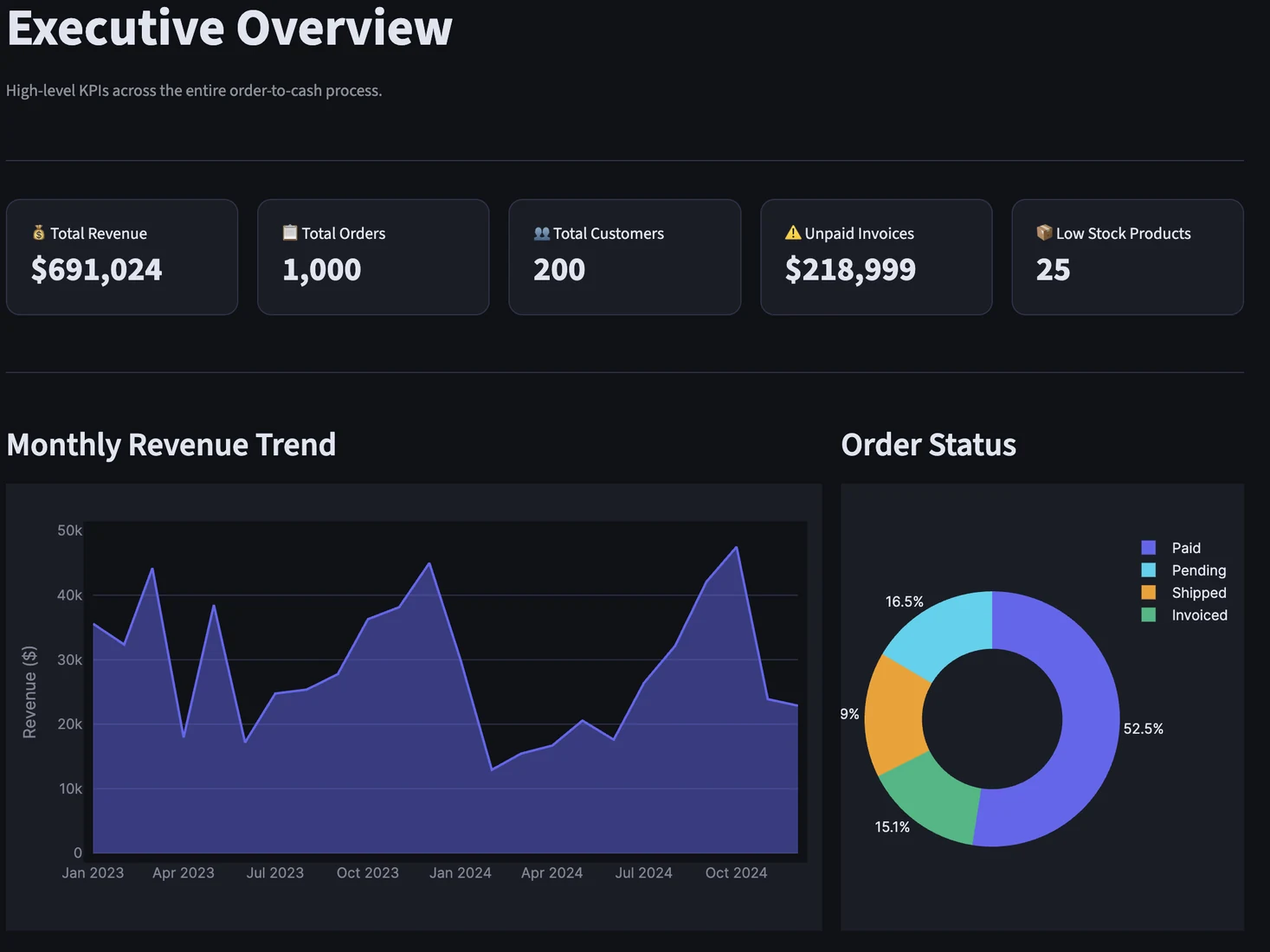
From transactions to reports
I built a small ERP to follow the data from order entry to payment. A normalized SQLite schema represents the operational workflow. A Python ETL pipeline reshapes those records into fact and dimension tables designed for reporting.
- A generator creates linked records for customers, orders, inventory, shipments, invoices, and payments.
- ETL scripts build dimensions, resolve keys, and load fact tables from the source database.
- Sales, shipment, and payment facts connect to shared customer, product, warehouse, and date dimensions.
- Dashboards use SQL views and analytics queries for sales, operations, invoices, payments, and inventory.
Reconcile before reporting
The project checks row counts, revenue totals, and key coverage against source tables. Those checks make it easier to catch missing records or incorrect joins before they affect a dashboard metric.