Quantitative finance · UT Austin capstone
Portfolio TLH Optimizer
A historical simulator for testing how tax-loss harvesting and rebalancing rules change portfolio performance.
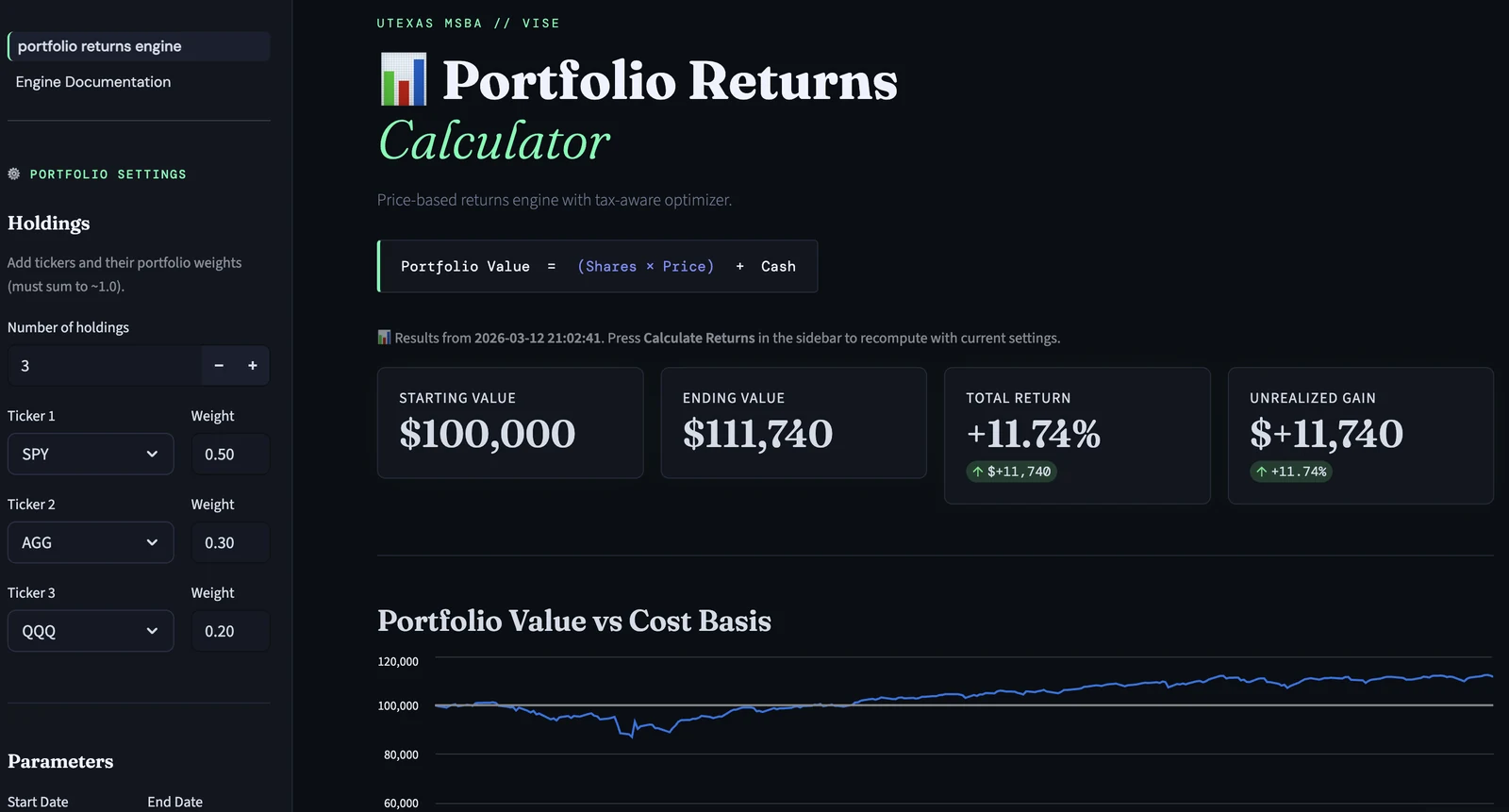
How the simulator works
For the Vise capstone, we built a simulator that applies different rebalancing rules to the same historical price data. It compares scheduled rebalancing with a drift-band approach, which rebalances when holdings move beyond a threshold from their target allocation.
A separate engine tracks tax lots, distinguishes short- and long-term gains, and models wash-sale rules. Streamlit brings the calculations together so a user can review return, drawdown, and risk-adjusted performance side by side.
Inside the backtest
The comparative analysis covered 96 runs. Testing multiple market conditions and allocations makes it easier to see which conclusions depend on the inputs.
- The study repeated the strategy comparisons across three historical market conditions.
- Two portfolios let the team compare how allocation changes the results.
- Each portfolio and market combination was evaluated against eight strategy setups.